
Reels are where people spend their time on Instagram, and where ads have the least time to work. Here is how small brands can make Reels ads that people actually watch, using a phone, a few simple rules and a steady habit of testing new ideas.
Scroll through Reels for a minute and you'll notice how quickly your thumb decides. A video gets a second or two to look interesting, and then it's gone. Your ad is judged the same way, alongside creators who make this kind of content every day.
That sounds daunting, but it's also an opportunity for small brands. Reels ads don't need studio budgets. Some of the best-performing ones look like they were shot on a phone, because they were. What they get right is structure: a strong start, a clear point and a format built for the screen people are holding.
Why Reels ads deserve their own creative
Many brands take a square image or a horizontal video made for somewhere else and run it in Reels. Meta will place it, but it shows up with empty bars or awkward cropping, and it immediately looks like an ad. People scroll past it.
Meta's own guidance for Reels comes down to three basics: build for a full vertical screen (9:16), use sound, and keep the important parts inside the safe zone. Ads made that way fit in with everything else in the feed, which is exactly what gets them watched.
The first three seconds
Everything after the opening only matters if people stay for it. Most of the value of a short video ad is delivered at the very start, so treat the first three seconds as the ad and the rest as a bonus. Some openings that work well:
- Start with the result: the finished room, the glowing skin, the plated dish. Explain how afterwards.
- Start with the problem: a cracked phone screen, a messy wardrobe, a child refusing to study. People who have that problem stop.
- Start with a person talking to camera: a face and a direct line such as "If your feet hurt after work, watch this".
- Start with movement: hands unboxing, pouring, cutting, trying on. A still first frame is easy to scroll past.
- Start with a surprising number or claim you can back up: "We delivered 4,000 cakes in Pune last Diwali."
Avoid opening with your logo, a slow pan across your shop or a title card. Those are the frames people skip.
Film for the vertical screen
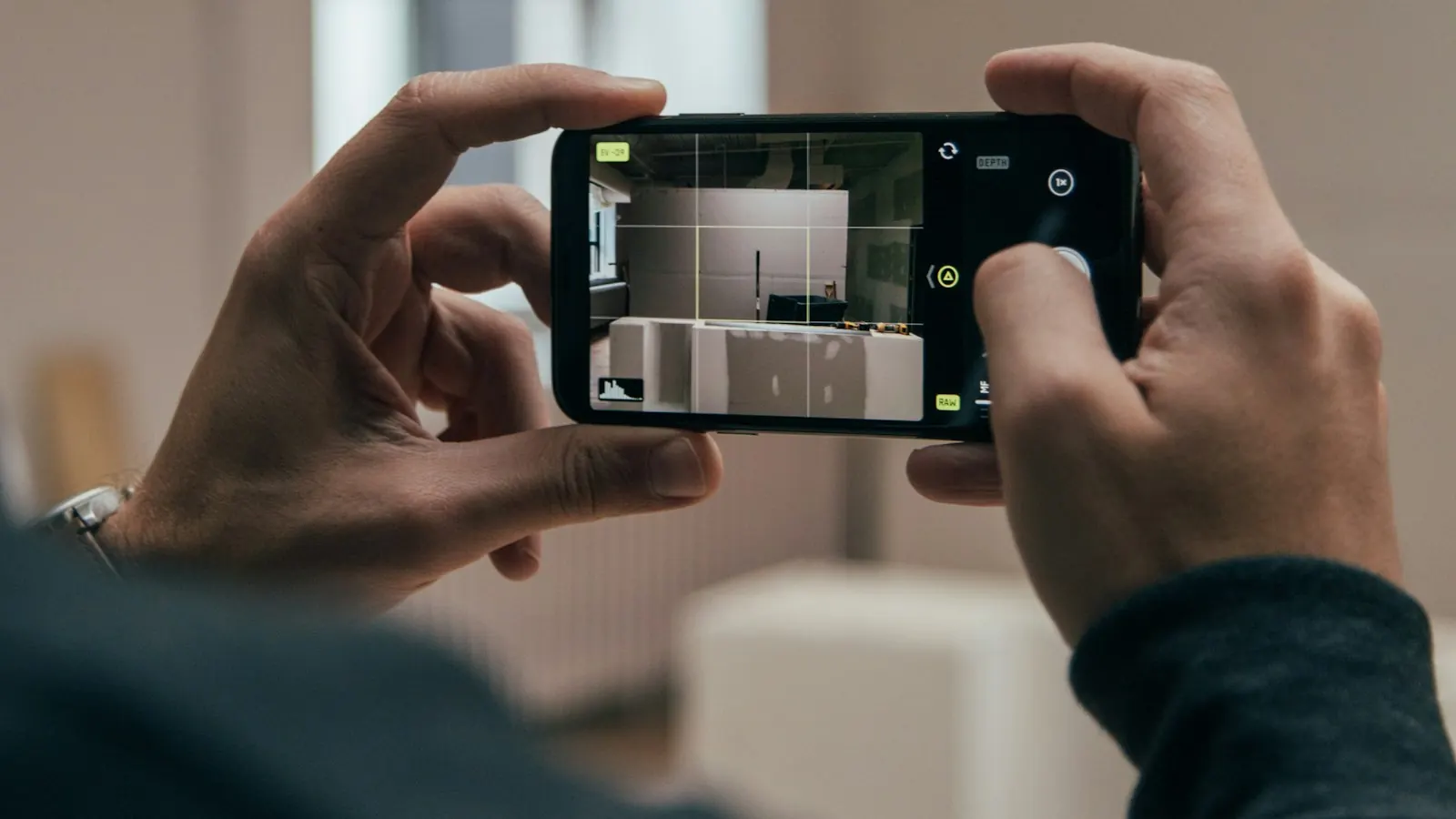
Shoot in 9:16, holding the phone upright, from the start. Cropping a horizontal video later loses the edges of your shot and usually cuts off something important.
- Fill the frame. On a phone screen, a product in the middle of a wide shot looks tiny. Get close.
- Use daylight from a window, facing the person or product. It beats most cheap lights.
- Keep the phone steady: a small tripod or resting it on a stack of books is enough.
- Record clean sound. A ₹1,000 clip-on mic makes a person talking to camera sound far more trustworthy.
- Keep each shot short, two or three seconds, and cut to the next. Long, static shots feel slow in Reels.
Mind the safe zones
In Reels, parts of the screen are covered by Instagram's own buttons and text: the account name and caption at the bottom, the like, comment and share buttons on the right, and the top bar. Anything important placed there gets hidden.
As a rule of thumb, keep text, prices, logos and faces out of roughly the top 14% and the bottom 35% of the frame, and away from the right edge. Ads Manager has a safe zone overlay you can switch on in the preview. Check it before every ad goes live, because it's an easy mistake that quietly costs clicks.
Sound on, with captions anyway
Reels is a sound-on place, far more than the regular feed. Music, a voiceover or someone speaking to camera makes an ad feel native. Choose audio that fits your brand, and remember that ads need properly licensed music, so use the tracks Meta makes available for ads or royalty-free music.
Still add captions or on-screen text for the key points. Plenty of people watch on mute on the metro or in the office, and in India your viewers may prefer Hindi, Tamil or another language to English. Short captions in the language your customers use are often worth more than a perfect script.
Ideas that work for small brands
You don't need a new idea every week. You need a handful of formats you can repeat with different products, people and angles:
- Founder to camera: why you started, what makes your product different, in under 30 seconds.
- Customer reaction: a real customer unboxing, trying on or tasting, with their permission.
- Before and after: a room, a haircut, a garden, a stain. The change is the story.
- How it's made: hands at work in your kitchen, studio or workshop. People trust what they can see.
- Answering a common question: "Does it fit wide feet?", "Is this safe for kids?". Each question is a new ad.
- Three reasons: three quick cuts, each showing one reason to buy, with a short caption.
Give Meta variety, not ten copies of one ad
Meta's ad system now relies heavily on the ads themselves to decide who sees them. An ad with a founder talking about quality reaches different people from an ad showing a quick before-and-after. That means the creative is doing much of the targeting work that detailed audiences used to do.
For a small brand, that has a practical meaning. Changing the colour of a headline or swapping the music doesn't give Meta anything new to work with. Instead, test ads that are genuinely different: a different person, a different opening, a different reason to buy, a different format. Keep fewer ad sets with several distinct ads in each, so each one gets enough budget to learn.
Add new ads regularly, for example two or three new ideas every couple of weeks, and switch off the ones that clearly lose. Ads tire as the same people see them again and again, so a steady supply of fresh creative keeps results stable.
What to look at when a Reels ad runs
Judge a Reels ad by the result you care about, sales or enquiries, but use a few other numbers to understand why it worked or didn't:
- How many people watched past the first few seconds: if this is low, the opening isn't working. Change the first shot before anything else.
- How many watched most of the video: if people stay but don't click, the middle is fine and the offer or call to action needs work.
- Click-through rate: shows whether the ad makes people want to learn more.
- Cost per purchase or enquiry: the number that decides which ads stay.
If you sell online, make sure the Meta pixel and conversions tracking are set up on your website, so Meta can see which viewers went on to buy. Our guide to Facebook ads for online stores covers the first month in more detail.
A 15-second Reel structure that works
- 0 to 2 seconds, the hook: a face, a problem, a surprising visual or a bold question. "Your kurta shrank after one wash?"
- 2 to 8 seconds, the proof: show the product doing the thing. Real hands, real light.
- 8 to 12 seconds, the reason to trust: a review, a number, the maker.
- 12 to 15 seconds, the next step: price and what to do, on screen and said aloud.
Filming kit for under ₹3,000
- Your phone, set to 1080p or 4K at 30 fps, filmed vertically.
- A clip-on microphone (around ₹1,000), which matters more than the camera.
- A small tripod or phone stand.
- Daylight from a window, or one cheap LED panel.
- A free editing app with auto-captions.
Film ten short clips in one session and edit them into three or four different Reels with different hooks and people. That's how a small brand keeps up the creative variety Meta now rewards. See our ad creative guide.
Why Reels variety matters more now
Under Meta Andromeda, each genuinely different video gives Meta a new way to reach a different group of people. Five versions of the same Reel with different captions get grouped as one idea. Five Reels with different people, problems and hooks reach five kinds of buyer. See creative diversification.
Ten Reel ideas for small businesses
- The founder in 20 seconds: why you started.
- A customer's honest review, filmed on their phone.
- Unboxing: the parcel, the packaging, the first touch.
- Before and after (within ad rules for your category).
- Three mistakes people make, and how your product avoids them.
- How it's made: the workshop, kitchen or studio.
- Answering the most common question in your DMs.
- A day in the life of your product in use.
- Side-by-side comparison with the usual alternative (fair and factual).
- A behind-the-scenes look at packing orders.
Read your Reels results
- [Hook rate](/glossary/hook-rate): if under about a quarter of viewers watch past three seconds, change the opening, not the whole video.
- Hold rate: how many watch most of it. Low hold with a good hook means the middle drags.
- [CTR](/glossary/ctr): whether people want to know more.
- Cost per result: the number that decides winners.
Quick quiz · 3 questions
Reels ads quiz
1. Viewers drop off in the first two seconds. What should you change first?
2. Five Reels with the same footage and different captions are best described as…
3. Why add on-screen captions?
0 of 3 answered
Frequently asked questions
Most Reels ads that work are between 10 and 30 seconds. Make the point early, so even someone who leaves after five seconds has seen your product and the reason to buy it.
Yes. Boosting a Reel that is already doing well with your followers is a quick way to test it as an ad. For sales or enquiries, running it through Ads Manager gives you better control over the goal, the audience and the tracking.
No. Real customers, your team and the founder often work just as well, because they look like genuine people rather than paid promotion. Creators can help you make more ideas faster. If you'd like Reels ads made and run for you, see how we work.